Free & open source Public beta
Filament Co-Edit
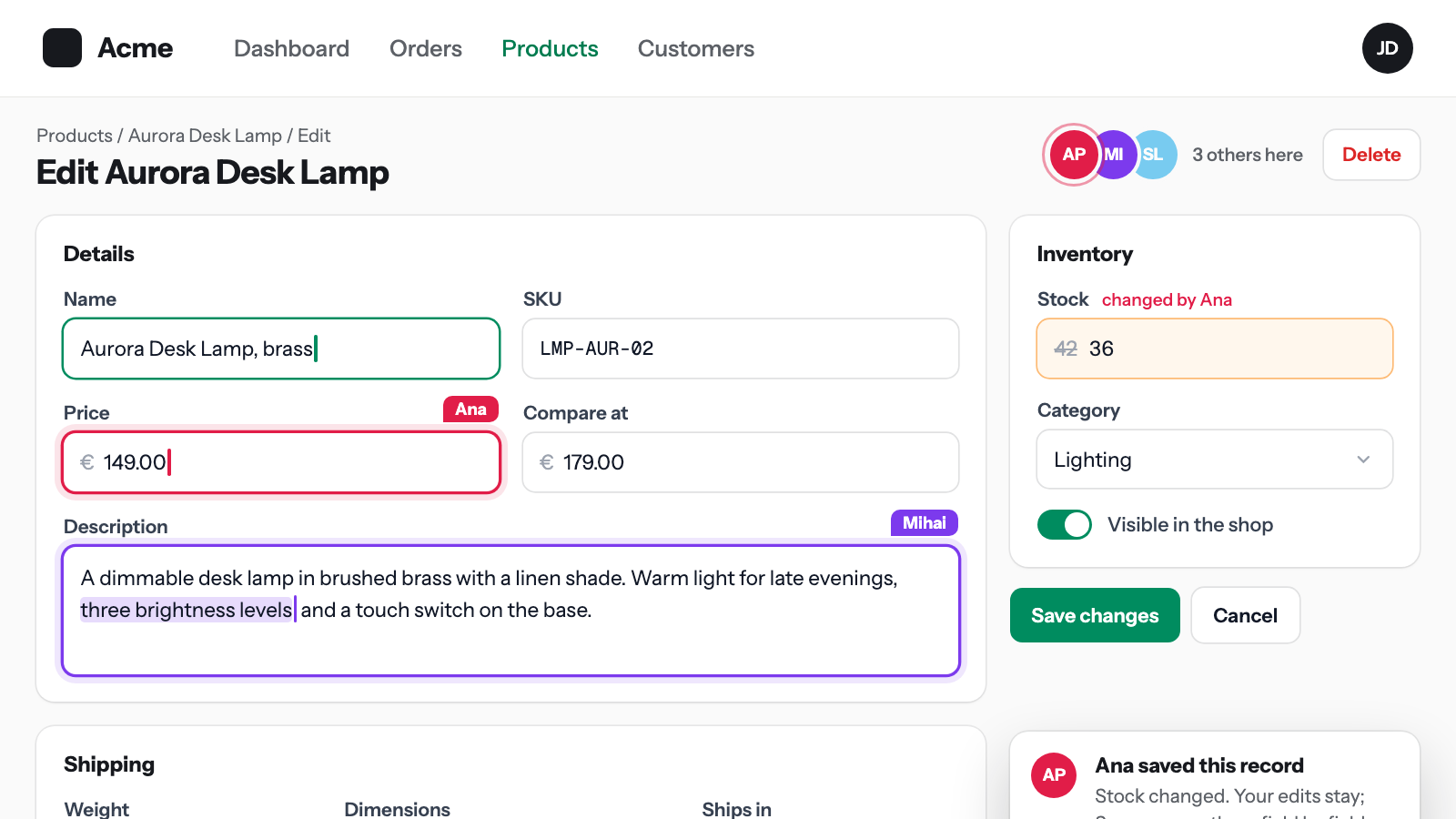
Several people edit the same Filament record at once without locking each other out. Avatars in the header and a tag on the field each person is in show who is where, kept in your cache by a small Livewire heartbeat, with no websockets and no migrations. When you save, their changes and yours are merged field by field, and a dialog asks only about the fields you both changed. A trait on the edit page is the whole install; modal edits, presence in tables and events for your audit log come with it.
- packstub/filament-coedit
- MIT, free for any project
- Packagist
What you’ll write
The real API, copied from the README, so you can judge the code before you install anything.
composer require "packstub/filament-coedit:^1.0@beta"What’s included
- Presence down to the field: avatars of everyone on the record and a name tag on the field each of them is in, through a cache heartbeat, no websockets
- Saves that merge: fields only they changed keep their value, fields only you changed take yours, and a dialog asks only about fields you both changed
- Edit pages via a trait, modal edits via EditAction::make()->coEdit(), presence in tables, events for your audit log, tenant-safe rooms
One command, from Packagist
No accounts, no tokens. This package is free and open source — it installs straight from Packagist like any other Composer package. It’s in public beta until 1.0, so the command asks Composer for the latest beta.
Free, and maintained like everything else we ship.
- Is it really free?
- Yes — MIT licensed, free forever, for any kind of project. We build our own plugins with it, and sharing it makes the whole ecosystem better.
- How do I install it?
- Run the Composer command above. It installs from Packagist like any other package — no Packstub account needed.
- Can I use it in commercial projects?
- Absolutely. The MIT license covers personal, client, and commercial use without restrictions.
- Where do I report bugs or request features?
- On the GitHub repository — issues and pull requests are both very welcome.
- How does this relate to your paid plugins?
- Same team, same standards. Free tools like this one are part of how we build our commercial plugins, so they get maintained with the same care.